Language and Listening

Did you know?

90% of your child's brain growth happens before the age of 5!

Your home is your child’s first and most important learning place. Long before children start school, they learn how to talk, listen, understand and communicate with the people around them – especially you.

A Home Learning Environment doesn’t mean lessons, worksheets or sitting at a table. It’s about everyday moments, loving interactions, play, and talking together.

A home learning environment is about:

  • Talking together
  • Listening to each other
  • Playing, singing and sharing stories
  • Exploring the world together

These simple things help your child learn how language works and how to listen and respond.

And the best part? You don’t need special toys or lots of money – just time, attention and fun.

🎉 Everyday moments that will support learning

Some of the best learning happens during everyday routines:

🍽 Mealtimes

  • Talk about the food: colours, tastes, shapes
  • Take turns talking and listening
  • Ask simple questions like “What do you like best?”

🚿 Bath Time

  • Sing songs together
  • Name body parts e.g head, shoulders, knees and toes
  • Talk about what you’re doing: “The water is warm!”

🛒 Out and about

  • Point out things you see
  • Talk about sounds: cars, birds, people
  • Let your child lead the conversation

📚 Reading Together – Even for a Few Minutes

You don’t need to read every word on the page.

Try:

  • Talking about the pictures
  • Asking “What do you think will happen next?”
  • Letting your child tell the story in their own words

Reading together helps children:

  • Learn new words
  • Understand how stories work
  • Build listening and attention skills

Top Tips for Supporting Language at Home

  • Get down to your child’s level and make eye contact
  • Give your child time to talk – don’t rush them
  • Repeat and expand what they say “Car!” → “Yes, a big red car!”
  • Sing songs and rhymes every day
  • Turn off background noise (TV, tablets) when talking


Talking Bradford Pathway

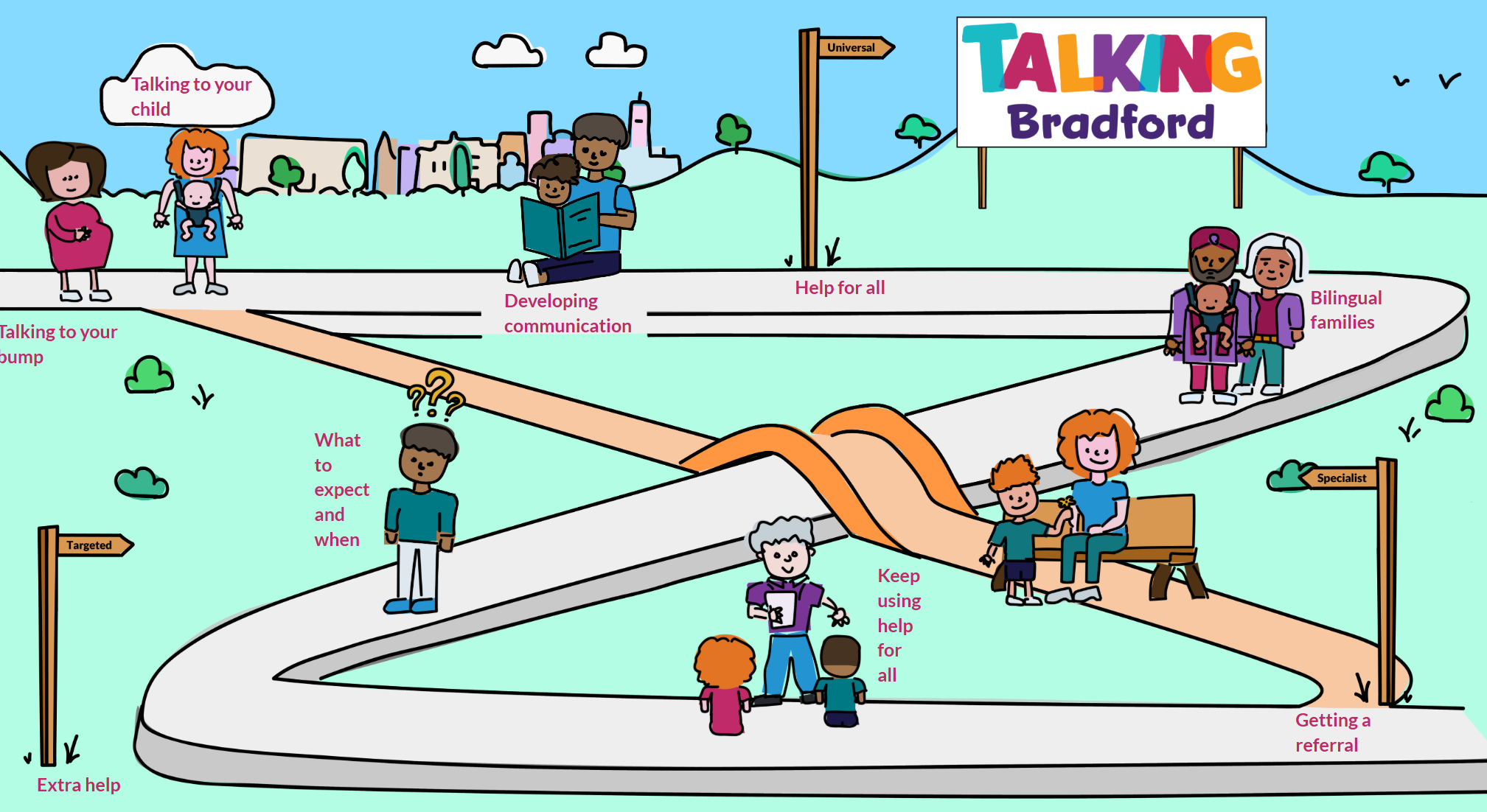
Image of the Talking Bradford Speech and Language Pathway

The Talking Bradford Pathway contains national and local support available to you. This includes information about activities in Family Hubs, play and learn sessions, courses and much more! Remember they are all free for families living in the Bradford District.

Visit Talking Bradford pathway

Who can I talk to if I am worried?

Children develop their talking and understanding of words at different rates but knowing what is typical can help you identify speech and language problems early.  

As many as 1 in 10 children may have speech, communication and language needs, but as parents and carers there is so much you are already doing or can do to support your child.

Make sure you have looked through the Talking Bradford Pathway, the section called 'what to expect and when' will guide you on what your child should be doing and where to go to get help if you need it.

You can speak to your health visitor - please visit our Support from your health visitor page which explains more about what they do and when they carry out development reviews. Remember it’s important to know that if you’re worried about something in-between visits, you can always contact your health visitor to get extra support, you do not need to wait.

Last updated: