Starting with food

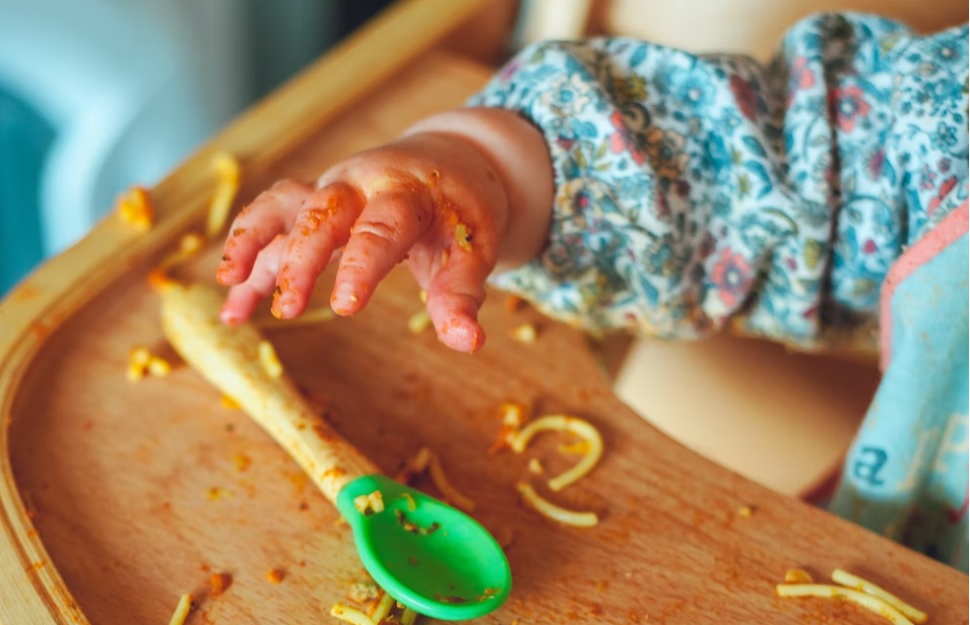
baby grabbing for spoon and eating spaghetti

You can begin to give your baby food and drinks, other than milk, from six months old.

Babies are naturally ready for food and drink as well as their breast feeds or bottle feeds from six months of age. From six months, babies are ready for mashed, lumpy or finger foods so there is no need to blend or puree foods.

Why wait until around 6 months to introduce solids?

It’s a good idea to wait until around 6 months before introducing solid foods because:

  • breast milk or first infant formula provide the energy and nutrients your baby needs until they're around 6 months old (with the exception of vitamin D in some cases)
  • if you're breastfeeding, feeding only breast milk up to around 6 months of age will help protect your baby against illness and infections
  • waiting until around 6 months gives your baby time to develop so they can cope fully with solid foods – this includes solid foods made into purées, cereals and baby rice added to milk
  • your baby will be more able to feed themselves
  • your baby will be better at moving food around their mouth, chewing and swallowing it – this may mean they'll be able to progress to a range of tastes and textures (such as mashed, lumpy and finger foods) more quickly, and may not need smooth, blended foods at all
Signs your baby is ready for solid foods

There are 3 clear signs which, when they appear together from around 6 months of age, show your baby is ready for their first solid foods alongside breast milk or first infant formula. They'll be able to:

  • stay in a sitting position and hold their head steady
  • co-ordinate their eyes, hands and mouth so they can look at the food, pick it up and put it in their mouth by themselves
  • swallow food (rather than spit it back out)

The following behaviours can be mistaken by parents as signs that their baby is ready for solid foods:

  • chewing their fists or toys
  • waking up in the night (more than usual)
  • wanting extra milk feeds

These are all normal behaviours for babies and not necessarily a sign that they're hungry or ready to start solid food.

Starting solid foods will not make your baby any more likely to sleep through the night. Sometimes a little extra milk will help until they're ready for solid foods.


Best Start in Life weaning guide

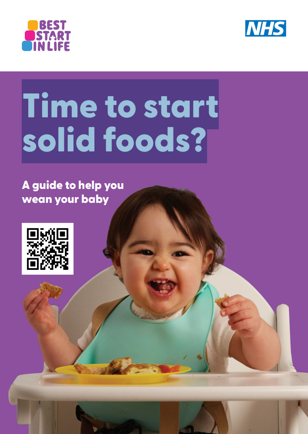
bsil weaning front pageFor more information on how and when to start feeding your baby solid foods, have a look at the Best Start in Life "Time to start solid foods?" guide.

If you're still sure if your baby is ready, have a look at the Ready or not weaning quiz.

Did you know about extra financial help?

Healthy Start Scheme

Get help to buy healthy food and milk. Healthy Start is a national government welfare scheme for families on low income that has run for many years. Pregnant women, or families who have children under four years old, may be entitled to get vouchers or payments every four weeks.

If you’re eligible, you’ll be sent a Healthy Start card with money on it that you can use in some UK shops. We’ll add your benefit onto this card every 4 weeks.

You can use your card to buy:

  • plain liquid cow’s milk
  • fresh, frozen, and tinned fruit and vegetables
  • fresh, dried, and tinned pulses
  • infant formula milk based on cow’s milk

You can also use your card to collect:

  • Healthy Start vitamins – these support you during pregnancy and breastfeeding
  • Vitamin drops for babies and young children – these are suitable from birth to 4 years old

Free Starting Solids course

Open to everyone in the Bradford District with a baby aged 0-8 months old.

For more information and to book visit HENRY Starting Solids.

Where to go for more advice

You can find more information on the  ‘Weaning’ page of the Better Lives Healthy Futures website.

You can also download free online guides to introducing solid foods - Eating well:the first year or explore the Eating Well Guide for Children Aged 6 Months to 2 Years for South Asian families, both of which have lots of ideas of recipes you can use from the First Steps Nutrition Trust.

For more evidence-based advice and support, visit the British Dietetic Association or the British Nutrition Foundation.

Last updated: